


Evaluation of scientific activity: international experience and national approaches

https://doi.org/10.31432/1994-2443.2025.16
Abstract
Relevance. In the context of the globalization of science and the transition to a knowledge economy, scientific assessment is acquiring strategic significance as a tool for managing research quality, allocating resources, and shaping scientific policy. In Azerbaijan, the existing scientific assessment model is still in the institutional development stage, requiring further methodological and regulatory improvement. The current assessment system, which relies heavily on quantitative bibliometric indicators, does not fully realize the potential for accounting for the qualitative, applied, and socioeconomic impacts of scientific results. This hinders the improvement of scientific management efficiency and its sustainable international competitiveness.
The aim of this study is to conduct a comparative analysis of international scientific assessment models, identify the characteristics and challenges of the national assessment system in Azerbaijan, and develop recommendations for the development of a more effective, transparent, and efficient scientific management model.
Materials and Methods. The methodological basis of the study was a comparative and institutional analysis, as well as a systemic and structural-functional approach. This study utilizes materials from international organizations (OECD, EU), regulatory acts of the Republic of Azerbaijan, data from scientometric databases, and research by foreign and domestic authors in the fi eld of scientific activity assessment and science management.
Results. The main international models for scientific activity assessment are systematized. The Azerbaijani model for scientific activity assessment is analyzed, identifying its institutional advantages and systemic limitations. Recommendations for developing a more effective, transparent, and efficient model for scientific activity management are developed.
Conclusions. The need for the Azerbaijani scientific activity assessment system to transition to a multi-level an multi-factor hybrid model combining bibliometric indicators, qualitative expert assessment, and socioeconomic impact indicators is substantiated. The introduction of performance-based funding, strengthening scientific ethics institutions, and the development of a national scientific information database will improve the transparency and quality of assessments, as well as enhance the international competitiveness of national science.
About the Authors
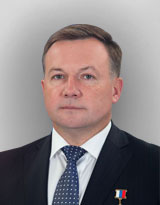
Z. F. Mamedov
Azerbaijan State University of Economics ; nstitute of Control Systems of the Ministry of Science and Education of the Republic of Azerbaijan
Azerbaijan
Azerbaijan
Zahid Farrukh Mamedov, Dr. Sci. (Econ.), Prof., Director of the Department for Organization and Management of Scientific Activity
6, Istiglaliyyat str., Baku, AZ1141
68, Bakhtiyar Vahabzade str., Baku, AZ1141
M. Kazymov
Baku State University
Azerbaijan
Azerbaijan
Mirali Kazymov, Dr. Sci. (Leg.), Associate Prof.
33, Academician Zahid Khalilov Street, Baku, AZ1148
References
1. Kleeva L.P. The Role of Science in Socio-Economic Development. Economics of Science. 2024;10(1):54–65. (In Russ.). https://doi.org/10.22394/2410–132X-2024–10–1–54–65
2. Pronichkin S.V. Assessing the Efficacy of Scientific Activities. National Interests: Priorities and Security, 2019;159(2):258–272. (In Russ.). https://doi.org/10.24891/ni.15.2.258
3. Mamedov Z.F., Mirzayev M.R. Reforming university finance: Emerging trends, challenges and prospects. 55th International Scientific Conference on Economic and Social Development: book of proceedings. Baku, 18-19 June 2020; vol. 2/4. Varazdin Development and Entrepreneurship Agency, 2020. P. 699-705. ISSN 1849-7535. https://savearchive.zbw.eu//handle/11159/4568
4. Akoev, M. A., Markusova, V. A., Moskaleva, O. V., & Pislyakov, V. V. (Eds). Handbook on Scientometrics: Science and Technology Development Indicators, Second edition. 2021. 358 p. [Monograph]. Yekaterinburg: Ural University Publishing, 2021, 358 p. ISBN 978-5-7996-3154-3 (second edition). https://doi.org/10.15826/B978-5-7996-3154-3 (second edition)
5. Kirichenko I., Shelyubskaya N.V. System of Research Quality Assessment in European Countries. University Management: Practice and Analysis, 2019;23(4):9–20. https://doi.org/10.15826/umpa.2019.04.025
6. Chernova E., Akhobadze T., Malova A., Saltan A. Higher Education Funding Models and Institutional Effectiveness: Empirical Research of European Experience and Russian Trends. Voprosy obrazovaniya / Educational Studies Moscow. 2017;3:37–82. https://doi.org/10.17323/1814–9545–2017–3–37–82
7. Birgit J., Bisrat M. Technology transfer offices and the formation of academic spin-off entrepreneurial teams. Entrepreneurship and Regional Development. 2022;34. http://doi.org/10.1080/08985626.2022.2080867
8. Atashov B.Kh. New priority of the state scientific policy of Azerbaijan: Development of scientific activity in universities. Economics and Management. 2023;29(9):1030–1040. (In Russ.) https://doi.org/10.35854/1998–1627–2023–9–1030–1040
9. Orlov A. Controlling of scientific activity. Controlling. 2019;71:18–24. (In Russ.). EDN: HYYDUO
Review
For citations:
Mamedov Z.F., Kazymov M. Evaluation of scientific activity: international experience and national approaches. Information and Innovations. 2025;20(3):59-73. (In Russ.) https://doi.org/10.31432/1994-2443.2025.16
Views:
130
JATS XML



 Email this article